
Introduction to Vegetable Soup
When you’re balancing a busy career and an active social life, finding quick, nutritious meals can be challenging. That’s where vegetable soup steps in as the perfect solution for young professionals! Packed with vibrant veggies and flavor, it’s a meal that checks all the boxes: health, convenience, and comfort.
Why is vegetable soup ideal for those in their 20s and 30s? First, it’s incredibly versatile. You can customize it with seasonal produce or leftover vegetables hanging out in your fridge, making it easy on your wallet and reducing food waste. Plus, it can be made in large batches, so you can enjoy it for lunch throughout the week or freeze it for later.
Furthermore, vegetable soup is a fantastic way to sneak in those essential nutrients. According to Healthline, a bowl can provide a substantial portion of your daily veggie intake. The variety of colors and textures in this dish can make healthy eating feel exciting rather than a chore.
So, grab your favorite pot and let’s dive into making a delicious, nourishing vegetable soup that’s perfect for young professionals like you!

Ingredients for Vegetable Soup
Fresh Vegetables
The heart of any delicious vegetable soup is, of course, the vegetables! For this recipe, you’ll need a vibrant mix of fresh produce. Start with 1 medium yellow onion, 5 carrots, and 3 celery stalks, all chopped to create a fantastic base. Don’t forget the garlic—4 cloves minced will add a delightful aroma. To round out the mix, include about 3 medium potatoes, diced, along with an eye-catching splash of color from 1½ cups of green beans, 1¼ cups of corn, and 1 cup of peas. Feel free to get creative and toss in any favorite veggies you have at home!
Herbs and Spices
Adding herbs elevates the flavor profile of your vegetable soup. Fresh parsley (⅓ cup) adds brightness, while 2 bay leaves and ½ teaspoon dried thyme bring warmth and depth. You can always adjust the herbs to suit your palate—italian seasoning or fresh basil works wonders as well!
Broths and Condiments
A rich broth is essential for a hearty vegetable soup. Choose between 4 cans of low-sodium chicken or vegetable broth to suit your dietary preferences. Add in 2 cans of diced tomatoes (undrained) to enhance the overall taste. Season with salt and freshly ground black pepper to complete the flavor. For a finishing touch, consider a splash of extra virgin olive oil before serving. Your delicious bowl of soup is ready to impress!
Step-by-Step Preparation of Vegetable Soup
Cooking vegetable soup not only warms the soul but also fills your kitchen with delightful scents. Follow these simple steps to create a comforting bowl of soup that's brimming with nutrients and flavor!
Gather Your Ingredients
The first step in making your delicious vegetable soup is to gather all your ingredients. Here's what you'll need:
- 2 tablespoon olive oil
- 1 ½ cups chopped yellow onion (1 medium)
- 2 cups peeled and chopped carrots (about 5)
- 1 ¼ cups chopped celery (about 3)
- 4 cloves garlic, minced
- 4 (14.5 oz) cans low-sodium chicken broth or vegetable broth
- 2 (14.5 oz) cans diced tomatoes (undrained)
- 3 cups peeled and ½-inch thick diced potatoes (about 3 medium)
- ⅓ cup chopped fresh parsley
- And some spices for flavor (see full list in the ingredients)
Having everything ready makes the cooking experience smoother and more enjoyable!
Sauté the Base Vegetables
Heat 2 tablespoons of olive oil in a large pot over medium-high heat. When the oil shimmers, it’s time to add your chopped onions, carrots, and celery. Sauté for about four minutes until they start to soften and become fragrant. Then, add minced garlic and sauté for another 30 seconds. This aromatic base is what makes the soup so irresistible.
Add the Broth and Seasonings
Next, pour in the broth and add the diced tomatoes, diced potatoes, and chopped parsley. Toss in your bay leaves, thyme, and season generously with salt and freshly ground black pepper to taste. The flavors will meld during cooking, creating a rich aroma that will have your mouth watering in no time.
Incorporate the Heartier Ingredients
Bring your vegetable soup to a boil. Once boiling, add the green beans, stir, and reduce the heat to medium-low. Cover your pot and let it simmer for about 20 to 30 minutes, or until the potatoes have softened. This is where the magic happens! If you add some corn (fresh or frozen) in the last five minutes along with peas, you’ll boost the soup's color and nutrition.
Final Touches and Serve
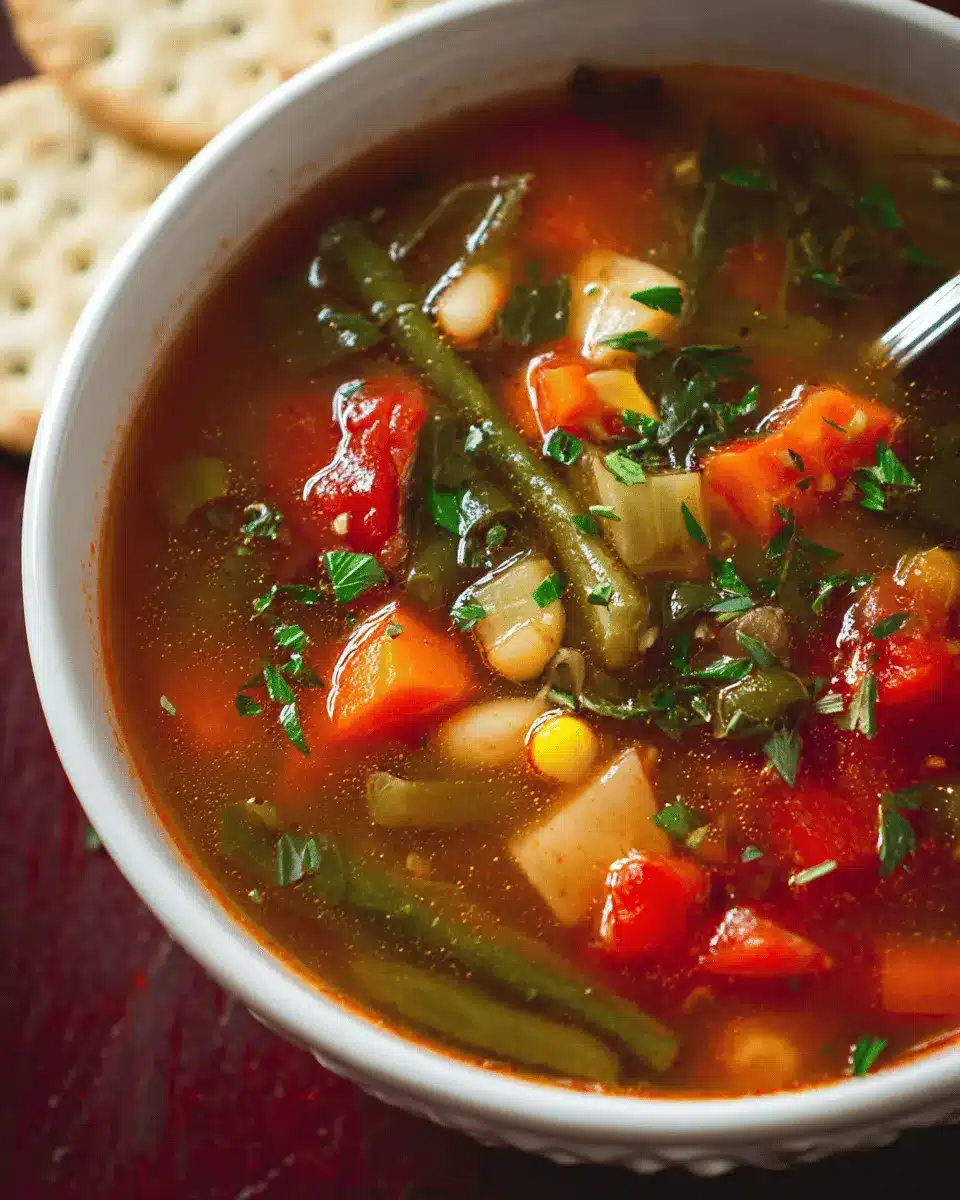
After the vegetables are tender, give your soup one last stir. Remove the bay leaves and season with additional salt and pepper if necessary. You can serve your delightful vegetable soup warm, garnished with fresh parsley for extra flair. It’s perfect on its own or with a side of crusty bread for dipping.
Enjoy your home-cooked vegetable soup, and remember, it’s not just a meal but an experience to savor!

Variations on Vegetable Soup
Seasonal Vegetable Options
One of the great joys of making vegetable soup is how easily you can customize it for different seasons. In spring, add fresh asparagus and peas, while summer is perfect for tossing in zucchini, bell peppers, and tomatoes. As the leaves change in fall, sweet potatoes, squash, and kale can add heartiness. During winter, consider root vegetables like parsnips and turnips to warm you up. Whatever the season, you can turn this comforting dish into a vibrant reflection of nature’s bounty.
Add-Ins for Extra Protein
Elevate your vegetable soup by incorporating some protein-rich ingredients. You can mix in cooked lentils, chickpeas, or black beans for a vegetarian twist. If you prefer meat, try adding diced chicken, turkey bacon, or even some lean beef for an extra savory bite. Quinoa or farro can also be excellent plant-based options that provide a nutty flavor alongside those hearty vegetables. Tailoring your soup not only enhances flavor but also brings a satisfying nutritional boost!
Cooking Tips and Notes for Vegetable Soup
Enhancing Flavor with Herbs
Boosting the taste of your vegetable soup can be as easy as incorporating fresh or dried herbs. Consider adding basil, oregano, or even a sprinkle of rosemary for a delightful aroma. For a richer broth, use homemade chicken or vegetable stock. Want an exciting twist? Simmer a parmesan rind while cooking, then remove it for layers of umami.
Storing and Reheating Soup Properly
Once you've enjoyed your warm, hearty vegetable soup, let any leftovers cool completely before refrigerating in an airtight container. When you're ready to enjoy it again, reheat on the stove over medium heat, stirring occasionally until piping hot. If you find the soup too thick, add a splash of water or broth for that perfect consistency. For further details on storing, check out this food storage guide.
Serving Suggestions for Vegetable Soup
Pairing with Fresh Bread
Nothing complements a warm bowl of vegetable soup quite like some crusty, fresh bread. A slice of sourdough or a warm baguette is perfect for dipping and soaking up the savory goodness. You can also serve it alongside a hearty focaccia or garlic bread for extra flavor.
Creative Garnishing Ideas
Elevate your vegetable soup by adding creative garnishes. A sprinkle of freshly chopped parsley or basil adds beauty and flavor. For a hint of creaminess, a dollop of sour cream or Greek yogurt works wonders. If you love a bit of crunch, consider topping it off with toasted seeds or nuts like sunflower or pine nuts.
These simple touches make your soup not only more delicious but visually appealing, too!
Time Breakdown for Vegetable Soup
Preparation Time
Getting everything ready for your vegetable soup is a breeze! It typically takes about 15 minutes to chop and gather all your ingredients.
Cooking Time
Once you've prepped, the cooking process takes around 30-40 minutes, allowing all those vibrant flavors to meld together beautifully.
Total Time
In just a little over an hour, you'll have a comforting pot of delicious vegetable soup to share with friends or family. Perfect for busy weeknights or cozy weekends!
For tips on maximizing flavor and other ways to elevate your soup, check out resources from Cooking Classy and Allrecipes.
Nutritional Facts for Vegetable Soup
Caloric Information
A hearty serving of vegetable soup typically contains around 150-200 calories, depending on the ingredients and portion size. This makes it an excellent choice for a satisfying meal without excessive calories.
Key Nutrients
This vibrant vegetable soup is packed with essential nutrients, including:
- Fiber: Promotes digestive health and keeps you feeling full.
- Vitamins A and C: Boosts your immune system and supports skin health.
- Potassium: Aids in maintaining blood pressure and overall cardiovascular health.
Dietary Considerations
Vegetable soup is naturally vegetarian and can easily be made vegan by using vegetable broth. It’s low in fat and gluten-free, making it a versatile option for various dietary needs. If you're looking for added protein, consider incorporating beans or lean poultry like turkey bacon or chicken ham.
For more nutritional insights, check out Healthline's guide on vegetable soup.
FAQs about Vegetable Soup
How can I make vegetable soup creamier?
For an extra creamy texture, try blending a portion of the soup with an immersion blender. Alternatively, add a splash of cream or a dollop of sour cream before serving. Another option is to include a few diced potatoes, as they naturally thicken the soup as they cook.
What vegetables can I substitute or add?
Feel free to get creative! You can substitute or add any seasonal veggies you enjoy, such as zucchini, bell peppers, or even leafy greens like spinach or kale. Don’t hesitate to experiment with frozen vegetables too, like peas or edamame, which can boost flavor and nutrition.
Can I freeze vegetable soup?
Absolutely! Vegetable soup freezes well. Just ensure it's cooled completely before transferring it to freezer-safe containers. It’s perfect for meal prep and can be enjoyed later; simply reheat on the stove. For serving suggestions, consider pairing it with crusty bread or a fresh side salad for a well-rounded meal.
Need more tips? Check out this guide for how to store and reheat your creations!
Conclusion on Vegetable Soup
Homemade vegetable soup not only warms you up but also enhances your well-being. It's a nutritious way to pack in veggies, control ingredients, and reduce sodium intake. Plus, it's incredibly versatile! So, embrace this dish in your diet – your body will thank you, and your taste buds will sing.
The Benefits of Homemade Soup in Your Diet
Making your own soup allows you to harness fresh, seasonal ingredients, maximizing flavor and nutrition. Here are several reasons why homemade soup, like our vegetable soup, shines in a healthy diet:
- Nutrient Density: By using a variety of vegetables, you're boosting your intake of vitamins and minerals.
- Control Ingredients: You can easily make it vegetarian, vegan, or gluten-free, adjusting salt and spices to your preference.
- Portion Flexibility: Make a big batch for leftovers or freeze portions for future meals, saving time and ensuring healthy options are always on hand.
- Cost-Effective: Using seasonal produce can drastically lower your grocery bills while minimizing food waste.
Feel free to experiment with ingredients, adding in your favorites or whatever you have at hand. Happy cooking!

Vegetable Soup
Equipment
- Large pot
Ingredients
- 2 tablespoon olive oil
- 1.5 cups chopped yellow onion (1 medium)
- 2 cups peeled and chopped carrots (about 5)
- 1.25 cups chopped celery (about 3)
- 4 cloves garlic minced
- 4 14.5 oz cans low-sodium chicken broth or vegetable broth
- 2 14.5 oz cans diced tomatoes (undrained)
- 3 cups peeled and ½-inch thick diced potatoes (from about 3 medium)
- ⅓ cup chopped fresh parsley
- 2 bay leaves
- 0.5 teaspoon dried thyme or 1 tablespoon fresh thyme leaves
- Salt and freshly ground black pepper to taste
- 1.5 cups chopped frozen or fresh green beans
- 1.25 cups frozen or fresh corn
- 1 cup frozen or fresh peas
Instructions
- Heat olive oil in a large pot over medium-high heat.
- Add onions, carrots, and celery and saute 4 minutes then add garlic and saute 30 seconds longer.
- Add in broth, tomatoes, potatoes, parsley, bay leaves, thyme and season with salt and pepper to taste.
- Bring to a boil, then add green beans.
- Reduce heat to medium-low, cover and simmer until potatoes are almost fully tender, about 20 - 30 minutes.
- Add corn and peas and cook 5 minutes longer. Serve warm.




Leave a Reply